Release All Felons from American Prisons

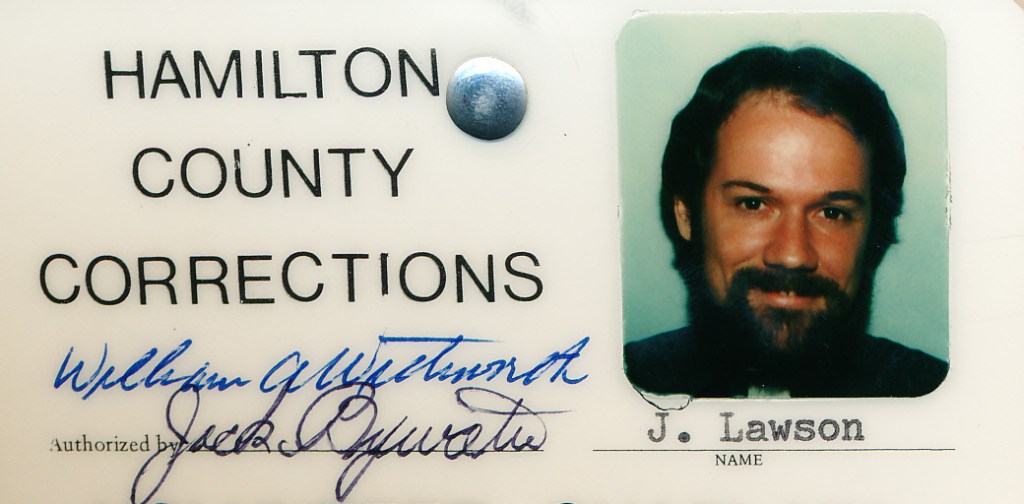
I spent a fair number of years working as a chaplain inside American prisons of all security grades–including death row. I worked in both men’s and women’s prisons, in the American South and the Midwest. I had a front-row seat to witness the gross injustice of the state and federal “justice system.” In fact, it didn’t take many years to discover the justice system itself was criminal. (If you have no firsthand experience of American prisons, read my book Criminal Justice, https://jacknlawson.com/criminal-justice/ It can be found on Amazon.)

I worked in one particular pre-release “open prison” in Raleigh, NC. It was, for the most part, a place where men who had served 10 or more years in prison spent the final months of their sentences becoming accustomed to the world outside, which for many had changed beyond recognition. By obtaining paid work in the community, they could learn how much the dollar had devalued during their incarceration, largely by paying for their food and accommodation in the “advancement center.” I remember one African-American inmate who had spent 20 years behind bars for the theft of a television. Imagine how he felt when white, wealthy criminals showed up for a few months of easy time? One I cannot forget was the son of a wealthy local businessman who, with some friends, stole a car and a motorbike, drove them to Myrtle Beach, SC where they commited robbery and then torched the car and bike. He received four months of easy time. Talk about criminal justice! Justice is not just blind, but deaf, mute and mentally impaired as well.

And now for the pièce de résistance: Americans are seriously considering putting a convicted criminal (34 felonies), adulterer, compulsive liar, tax-dodger and rapist in the White House. If he deserves to walk away from his crimes unpunished–and even rewarded by the nation’s highest office–then, in this former prison chaplain’s opinion, the American justice system has set a precedent whereby all other felons deserve to walk free. I defy you to prove it should be otherwise.

The Demon in Democracy

Even the basic student of history knows that democracy has one internal flaw: It can be voted out of existence. In early 1933, Hitler’s National Socialists (Nazis) were legally and democratically elected. That was Germany’s last election for 16 years. During the interim, the nazis brought about the cataclysmic Second World War, including the destruction of their own country. In 2000, Russia’s President Putin was elected to a 6 year term, with a maximum of two terms. Similarly, Mahmoud Abbas, president of the Palestinian Authority, was elected in 2005 to a five year term…you do the maths. And now Donald Trump is talking about an extended time in office and a “unified Reich.” Be careful what you wish for…

I am a staunch supporter of democracy, but I am a realist and have been aware for most of my life that there lies a demon in the heart of democracy, and that is: it contains the possibility of its own destruction. US news pundits are falling all over the themselves asking whether a convicted felon can serve as president. Sadly–and shockingly–the answer is “yes”. It seems the likes of James Madison and those who helped him formulate the constitution never envisaged the problem of having a felon be nominated for the presidency. Thus no provisions were made to counteract it. Ten years ago, who could have seriously considered that a crime boss would be selected the candidate of the Republican party? But now, it has become a badge of honour.

If Trump should be re-elected, this would set a dangerous precedent that would allow murderers, child abusers, drug dealers and others to serve as president. But that is, of course, if there will be further elections. Trump openly admires the likes of Putin, Kim Jong Un and other despots. To dismiss the possibility of a younger Trump replacing Don, Sr. when he dies is not beyond the realm of possibility. Remember, Hitler spent time in prison for treason nine years before he was elected Chancellor. It was during his imprisonment that Hitler penned Mein Kampf, laying out plans that most of Germany (and the world) never took seriously…until it was too late.

Because most people are subject to their projections–what they want to believe or see–rather than the hard facts staring them in the face; they believe the likes of Trump will “be their friend”. Was it Lenin who said, that in order to retain power, first you kill your enemies, then you kill your friends? But that alas is where denial comes in: “It can’t happen to me/us.”

We would do well to remember the words of German pastor Martin Niemoller, himself a decorated U-Boat captain in WW1 (Iron Cross, first class) and who voted for Hitler in 1933; something he very much came to regret. When he became an outspoken critic of the nazi regime, he was imprisoned from 1937 until the end of the war in May 1945.

“First they came for the socialists, and I did not speak out—because I was not a socialist. Then they came for the trade unionists, and I did not speak out—because I was not a trade unionist. Then they came for the Jews, and I did not speak out—because I was not a Jew. Then they came for me—and there was no one left to speak for me.”

Martin Niemöller

East of Eden

For some of my readers the title of this blog will conjure up a novel by Steinbeck; others will recognise it from Genesis 4 wherein Cain, after killing his brother Abel, is banished to live “east of Eden”. Of course, Cain’s parents (Adam and Eve) had already been banished from Eden in the previous chapter, after the incident with the “forbidden fruit.” Apart from Trumpist “evangelicals” and other fundamentalists, hardly anyone takes these accounts to be “historical” or literal. Rather, they are stories about growing up and leaving the world of childlike innocence for the world of adult experience. An angel guarding the gate to Eden with a flaming sword or not, the point is that there is no going back. In that sense, all of humanity which reaches adulthood abides east of Eden.

However…although we no longer live “in” Eden, according to the biblical accounts, Eden still exists. You wouldn’t be blamed for uttering an exasperated “Where?!” The answer is simple: Eden is all around us. It is found in all wild animals, farm critters and most pets. According to the biblical narrative the animals were never banned from Eden. And if, as I believe, the Genesis accounts are metaphors for states of being or states of mind, only animals–apart from humans–remain in their ‘Edenic state’ (if you will). And here, I must credit Francis of Assisi and Viktor Frankl with the kernels of this thought.

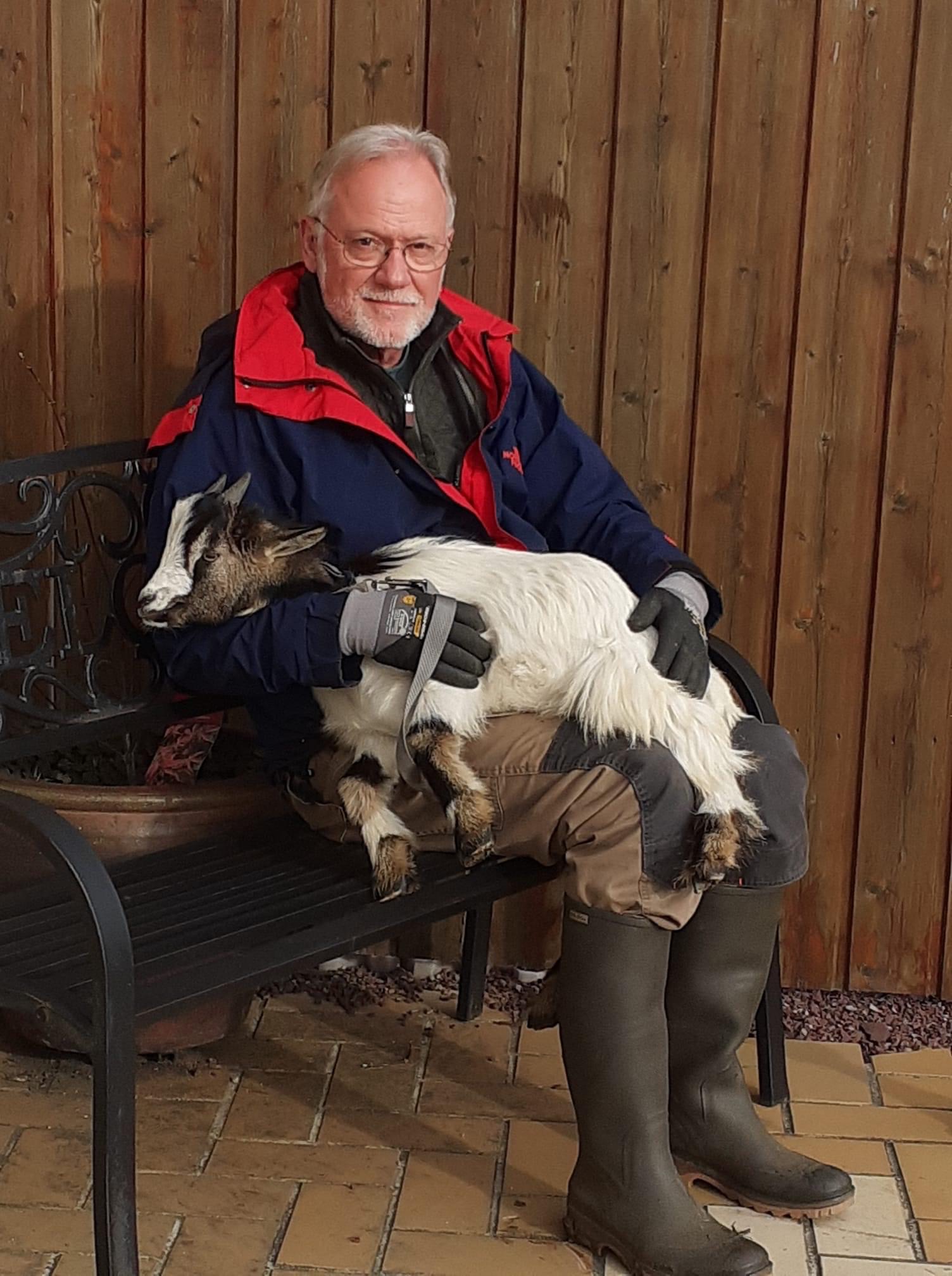
I have always loved animals of all sorts, and they have always been attracted to me. But it’s since I became a goatherd in rural France that I have truly come to appreciate the Edenic state of animals. They are always exactly what they are created to be, whether it be their ‘goatnicity’, or ‘dogness’. But let’s stick with goats as I love ’em! (By the way, the song about the lonely goatherd from “The Sound of Music” is non-sensical. One cannot be lonely with goats! It’s an existential impossibility.) For goats, their Eden–and their security–is embedded in their instincts. (This is true of nearly all animals, exccept those we have overbred for our desires.) They sniff and taste various plants to discover what is good for them. And because they are the closest thing to wild animals you can keep, they are always on the alert, ready to run for shelter if the slightest thing scares them. When the days shorten, their coats lengthen. Similarly, when the daylight begins to linger, they shed their coats. The goat’s four stomachs–like all ruminants–enables them to synthesize protein from plants which would utterly useless for our consumption. They even know which plants to eat in order to get rid of worms.

So as you can see, we who have become alienated from Eden, are much needier in terms of survival: food, seasonal clothing, shelter, medical care, and the need to earn money to satisfy all of our needs. We won’t even address human idiosyncrasies and mental health issues! (So if by now you haven’t envied a goat’s life then I haven’t done my job!) In many ways, those who advocate animal rights, the protection of endangered species, action over climate change and more, are actually the defenders of the vestiges of Eden. The English poet, John Milton, is best known for his epic poem, Paradise Lost. Hardly anyone remembers that he also wrote another poem entitled Paradise Regained. The only way that we can hope to regain Paradise or Eden is through reconciling ourselves to earth’s other species–plant and animal–and most of all, to each other. War and violence towards all living things can no longer be an option. Eden begins with you and me.

The Mystery of Donald Trump and the Poisoned Blood!

Donald Trump’s Christmas gift to America–and the world–was the following: “They are poisoning the blood of our country,” Trump said about immigrants. “And I’m not talking about a specific group… they’re destroying our country. They’re coming in from every continent, and we have no idea, we have no idea who they are, what they represent. Are they from jails? Are they from prisons? And I will tell you, a big percentage of the people coming in are from prisons and from mental institutions and are terrorists. And we cannot let that… and that is poisoning our country.”

Hmm, let us think about Trump’s rambling words for a moment as we consider that Melania Knauss (Trump) hails from Novo Mesto, Slovenia. Why, she’s a foreigner! An immigrant! Thus we have every reason to believe–according to Donald–that their son, Barron has poisoned blood. It stands to his tortured reason, does it not? Not only that, but she and Trump were married (2005) even before she became a US citizen (2006). The horror! Even the dictator that Trump so often mimicks (Adolf Hitler) never married a foreigner. Good grief!

Sadly–and obviously–Trump has neither self-critical capacity nor any real self-knowledge. Otherwise he would be less likely to come out with such tripe. What is worse, there are some tens of millions of his devotees in the US who also lack critical thinking. I would like to think that their xenophobic proclivities are simply based on ingnorance of history and facts; that they do not realise what Hitler and his nazis were intent on doing from the things they said before they came to power. But then one sees footage of the rallies of Trump supporters, with swastikas and Confederate battle flags bandied about. And I realise that too many people follow Trump precisely because he is a Hitler for the 21st century. It’s worth adding that as an undergraduate, my German language project was to translate all of Hitler’s radio broadcasts between 1933 and the outbreak of war in 1939. Thus I am very well acquainted with his racist rhetoric and that of his orange acolyte.

I myself am an immigrant (x2). I left the US decades ago for life in the UK, and later I immigrated to France. But in between the two, my wife and I decided to try the US again. We arrived in North Carolina during the bitter-sweet final months of Obama’s presidency and then spent three years dealing with Trump, his worshippers and all that he unleashed on society. With what we saw and heard, we decided to return to Europe–but not England–as they had their own buffoon for Prime Minister. Happily, in neither England nor France has anyone accused me of poisoning the blood of my adoptive country. But sadly, whilst we were living in the US, there were those who questioned our right to be there. I had lost my regional accent years ago, so for many Trumpists we were simply foreigners and treated accordingly. Senator Burr’s secretary flat out told us to go back to England.

For the past 3.5 years we have lived in rural Normandy and can honestly say we have never been treated as “foreigners”. Newcomers, yes, but never have we been treated as threats to the French republic or its way of life. America, by comparison has become xenophobic. There’s a sad irony in this as it was the French who donated the Statue of Liberty to America. Just another historical fact unknown to most Trumpists. Truthfully, if anyone has the right to concern over the poisoning of America, it is the remnants of the native populations who have suffered grievously (and to this day) at the hands of white Europeans–many of whom actually were convicts. An uncomfortable truth is that the colony of Georgia was in fact a British penal colony!

So the great mystery is: How long will it take for the white supremacists of America to realise that it is they who have poisoned both the native peoples of America, as well as the slaves brought from Africa? The sad truth is, we humans tend to accuse others of the things that scare us most about ourselves. It is far too easy to blame others than to change ourselves.

Of Critters and Christmas

In Western civilisation, most people who celebrate Christmas these days prefer that it be antiseptic. Trees are often artificial, nativity scenes–whether plastic, wood, ceramic or live–are clean and odour free. Who wants to smell animal excrement or rotting hay for Christmas? Well, Jesus for one. Whatever you might believe, according to Luke’s Gospel account, God specifically chose the lowliest, and perhaps smelliest, of places to enter into human flesh. If that isn’t a message of hope, then I don’t know what is.

I have just returned from feeding our chickens and goats. I trudged through the Normand winter rain and mud to get to them. All the critters were hungry and they let me know it. The evening menu was hay for the goats, and mealworms and cracked corn for the hens. And that’s another thing about nativity scenes: if there is sound, then it’s usually angels singing in four-part harmony. However, according to Luke, the angelic serenade was only on the night of Jesus’ birth. Otherwise, it was a continuous farmyard serenade–or cacaphony–depending upon your point of view. That has been on my mind a lot this week as I have contemplated the birth of Jesus. I love the smell of hay…even though it makes me sneeze! And I love watching our goats tuck into it, their little mouths overladen with this dry delight. Every day I fill a manger–sometimes the hens reward me by laying eggs in the manger!

And another thing, although this nose of mine might not be insured like those of some wine sommeliers, it can tell the difference between most farmyards droppings! (I would say “No shit!” but that would be pushing the joke too far.) Blindfold me and present manure on a platter–be it horse, cow, chicken or pig, and I’ll nail it. Okay, I deliberately left out goat droppings, because they are almost odourless! (A great reason to keep them!)

Why this scatalogical excursus? Simply to say that if God is to be found anywhere in human life, then it is in the lowliest of circumstances: barnyards, streets of homeless people, prisons and more. The problem is that we can become too comfortable to see or experience the divine in these circumstances. The result for us comfortable types is that we frequently cannot see or experience God in the dark and dirty places of our hearts and minds. God can’t be there! God needs a linen table cloth, a red carpet, etc. To reprieve the scatalogical theme: Bullshit! That’s just running from ourselves and a cop-out for not doing our inner work.

For those of us not fortunate to live in the countryside, during what is left of Advent or over the days of Christmas, go visit a working farm or stable. Let all of your senses work. And let them turn you inside out, exposing the feelings, emotions, hurts or anger that need God’s renewal and healing. Even today, it begins in such a simple fashion.

Making Crime Pay in the USA

If financial success is your main goal in life, without compunction about how you make your money, then there is good news for you. For unlike in Russia, where you’d have to marry into an oligarch’s family or kiss Putin’s ass (and even then you’d stand a high chance of falling out of an open window in a tall building), there is a way to unlimited financial success in the USA. Just follow these three simple points.

  1. Join the Republican Party.
  2. Commit any crime or crimes of your choosing: tax fraud, sex with under-aged children, libel—you name it!—and the Republican Party will close ranks around you and support you. It’s that simple! Whatever laws you break or sins you commit (as understood by evangelicals) you’re as innocent as a lamb and pure as the driven snow. But wait! There’s more!
  3. When you are caught (and caught you will be, because to join the GOP these days, you can’t be very bright) go on Fox News(?), whine and say “It’s all lies!” Millions of fellow Republicans with more money than sense will send you cash and cheques faster than you can say “I want to speak to my attorney.”

Finally, do remember this important factor: the US Constitution is best left unread. Therefore it can mean anything you choose it to mean. This also applies to the law codes of every state. So wrap yourself in the Stars and Stripes, proclaim family values and then set about fleecing your family, neighbours, employers/employees and most of all, screw Uncle Sam!

Dem Bones, Dem Dry Bones

The title for this blog comes from an old spiritual, which has at least two different versions. The one I’m thinking of is based on Ezekiel 37, wherein the prophet is whisked by God to a valley of dry bones, who represent the dead and exiled people of Israel, following their defeat by Babylon. If you don’t know the spiritual, then click on this fine recording by The Delta Rhythm Boys.

The song follows the scriptural reference, begging the question asked by God: “Can these bones live?” For anyone who has tried to live a life based on faith–Jewish, Christian or whatever–the question about whether dry bones can live again is as pertinent as ever. Why? It’s simply because most organised, institutionalised religions are, to a great extent, dry bones. Speaking only for my own faith tradition, the scriptures and the vast preponderance of theology, and the dogma which arises from theology, are skeletal remains of other people’s spiritual experiences. Most are written in third person narratives, with the occasional first person account–such as the letters of Paul.

Speaking from personal experience, no matter how much theology, doctrine or dogma one reads, it is a rare person indeed for whom such reading becomes a life-changing spiritual experience. I should also state that the reading of such material won’t prevent one from having a first-hand, genuine experience of the divine. It’s just that all the reading simply isn’t necessary. Like so much in life, I had to learn that lesson the hard way. The problem is that insitutionalised religions want their clergy to be well-versed in their scriptures–yes–and particularly in their doctrine, i.e. their interpretation of scripture. However, far too often doctrine becomes about the ‘right way to believe.’ It tends towards having the right answers to all questions of faith and doctrine. Rigid doctrine and dogma lead to fundamentalism, which then leads to the persecution/condemnation of those with different beliefs. Just consider Islamic State or American evangelicals–their doctrines hold that non-believers (in their judgement) should be eradicated. They hold that there is only one way to worship God. Yet, nothing could be further from the truth! I have found that it is the asking of good and delving questions that will more often lead one into a genuine life of faith. But be careful: good questions lead to other, sometimes better, questions! It is questions that lead us forward. Cut and dried answers lead us into a cul-de-sac.

Rather than go into my litany of the pitfalls of organised religion, I would encourage you to read my novel No Good Deed or Criminal Justice. Both or either will give you an insider’s view into the way the institutional church–to put it politely–can kick the stuffing out of you. Like all institutions, the church seeks to perpetuate itself, with its rules, dogma and doctrines. On a daily basis, these become more important than how we might grow closer to God or love ourselves and others. The teachings of Jesus fall by the wayside. So, am I telling you to stay away from churches? Not really. But I am suggesting that if you have real questions of spiritual life and faith, then find people whose life and faith have been tested; people who have suffered and come through it. There are many of them–but they won’t necessarily be wearing a clergy collar. Faith is about living life fearlessly and lovingly. To do less is to find oneself in a desert of dry bones.

The Graceful Art of not Giving a Shit

I attended a gathering at our neighbours’ house yesterday evening and found myself in a conversation about ageing with some other 70-somethings. I averred that one of the best things about ageing consisted in not giving a shit anymore. But let me qualify that statement with one word in this blog’s title: “Graceful”. Do I give a shit about the war in Ukraine, climate change and growing inequality in the community of nations? Absolutely! I give a shit about those things and more. That’s where grace comes in. Grace is what keeps me from not giving a shit about anything in this world today. Grace is that momentary clutch in our hearts and brains that keeps us from saying things that are gratuitously hurtful, untrue, deceitful, etc. Grace creates the space for compassion and action for the sake of others.

So what is it I don’t I give a shit about? As I like to keep my blogs on the short side I won’t provide an exhaustive list. Let’s consider the BIG one: I don’t give a shit what other people think about me. Their opinions are worth whatever I pay for them. This is the one quality I wish had developed earlier in life. In any case, it is a welcome change for this man who grew up white, Protestant, in the southern US, where speaking the truth–even with grace–was considered impolite. I spent a lot of my earlier life rethinking conversations and wishing I had spoken the truth that was in my heart…but alas. I certainly wouldn’t have taken some of the jobs I did if I had been true to myself. And I wouldn’t have tried to change myself to fit the jobs I had–particularly parish ministry!–a job in which every parishoner seemingly has a different job description for the pastor. But this was equally true of my academic life. I simply didn’t fit–particularly in England. However there are many other jobs and professions which can equally damage the person we know ourselves to be if we have to live and act contrary to our true selves. If you’re reading this, chances are you know what I mean.

For those of you acquainted with The Myers-Briggs Type Indicator, my psychological type is INFJ (Introverted Intuition, person/value-focussed, with decisiveness). In Western society my type comprises exactly 1% of men. In short this means I pretty much forge my own path–something which threatens most institutional types, including the church and university. The psychologist we candidates for ministry had to see as part of our preparation for ministry chuckled as he told me that I worked too hard at trying to appear normal! Ah, if only I had known the real implications of that humorous remark at the time. Instead I went through all the contortions required for becoming an ordained minister and then an academic. How I came to envy people whose passions became their paid employment–artists, writers, true entrepreneurs, etc.

A few months after (finally) leaving parish ministry (which was literally killing me) in 1997, I was awarded a British Academy research grant which entailed going to Israel to work with a scholar at Tel-Aviv University, who incidentally became one of my dearest friends. One day when I was sharing some of my work with him, he questioned why I had stated something the way I did. I think I must have said something about wanting to please or keep on the good side of scholars in the UK (where I lived). Shlomo looked at me and asked “Why do you care about the opinions of people you don’t respect?!” He was exactly right. Why should I have cared–not just about the opinions of others–but opinions of people for whom I had little respect?

At its root, not giving a shit is actually about self-knowledge. It is respect for the person one knows oneself to be–rather than trying to live up to other people’s expectations (a zero-sum game)–or worse–their projections. Finally, the graceful art of not giving a shit is not about holding others in contempt or giving ourselves permission to say or do whatever we like. That’s narcissism. Rather, the graceful art of not giving a shit honours the other person, even if we do not like that person or want to spend time around him/her. We can simply walk away in peace. After all, what’s the point in giving a shit?

The White Guy

My first ‘real’ job after graduating from college was at Guilford Technical Institute in Greensboro, NC. It didn’t pay very well, but it more than made up for that in experience, because it was my first real experience at being a minority. I was hired to work with a team which was working largely in ‘project housing’ in Greensboro. It was funded for only six months. Our aim was to go door-to-door and try to encourage residents to take advantage of nearly zero-cost literacy/numeracy programmes, as well as classes to work towards a high school diploma equivalent. And, yes, I was the only white person on a team which worked primarily in African American neighbourhoods.

One of my fellow team members often went with me to 100% African American areas, frankly to shepherd me. As he put it, “They’ll think you’re a narc.” With Ron’s help I learned the street lingo and salutations to help people get over the shock of this bearded, shaggy-haired white guy at their door. I also learned some intricate handshakes. When Ron was with me, we were usually invited inside to explain what we were offering. As a lone white guy, I usually had to speak through a partially-opened or screen door. In such cases I left my name and phone number and hoped for the best. However, whenever potential clients called our office, they rarely remembered my name. Instead they told the secretary “It was some white guy” who had told them about our courses. With that, the secretary would gleefully call out to me: “Hey, white guy! Phone call for you on line one.” Others in the open plan office would chuckle.

Although it was fifty years ago, I think I can honestly remember that the first time or two of being called “white guy”–and not by my name–brought me up short. I wasn’t particularly offended; rather I was jolted awake. I thought of the middle-class neighbourhood in which I grew up and all of the nameless African American maids who arrived by bus in the mornings as I was leaving for school. For what it’s worth, ours was the only house that didn’t have a maid–mainly because my mother was a house-proud homemaker. When visiting our neighbours, they usually referred to this human person with dark skin as “the maid.” Of course, there were times when she was referred to by her first name–but never, ever given the diginity of “Mrs. ___.” However, for me the moniker “white guy” would always be temporary. Still, it opened my eyes…and my mind.

After some weeks, not only had I become very fond of all the team members, but I played up to the appellation “white guy” by reversing things. As soon as someone called for me, I would jump out of my seat and begin walking in Stepin Fetchit style, saying “Yassuh Boss, here I comes.” They would howl with laughter at a white guy mimicking a stereotyped black actor from earlier decades. How crazy was that? One day, when we were all eating lunch in the office, someone suggested that we write down all of the racial epithets we had heard for each other’s race. The first thing I noticed was that I was still writing when the others had finished. We then shared the results. It hit me between the eyes that most of the black slang for whites was descriptive, but mainly harmless: honky, cracker, Mr. Charlie, etc. However, the list I had compiled was vile by comparison, and no, I will not share it. I remember all of us reflecting on that difference for some moments.

Over the months we worked together, whenever the topic of race came up, we would usually finish by laughing–largely because of how stupid it is to treat people differently simply because of skin tone. When the programme came to its end, I went to each person to give my love and best wishes and to thank them for all they had helped me learn. The oldest member of the team surprised me when she wanted to thank me. When I asked her why, she said that I was the first and only white person around whom she could simply be herself. I was stunned and I was deeply moved; and to this day that remains one of the highest compliments anyone has ever paid me. Would that we could all give that gift to one another: the gift of allowing people simply to be who they are.

May I Make an Appointment for Last Week?

Yes, that is exactly the phrase I recently used whilst calling to make a medical appointment. Well…what I actually said was: Puis-je prendre un rendez-vous pour la semaine dernière? (I live in France.) In any case it greatly amused the medical secretary…I think she’s still laughing. It’s nice to make someone’s day brighter. By the way, I did get the appointment—but for the next week. But you had worked that out, right?

In my defence, I would like to say that part of my oxymoronic question was down to my age. You see, I’ve never been this age before. What about you? So most of what I do is being done for the first time since I turned 71. Things both physical and mental take more time than they used to do. Some are damn near impossible. To wit: my wife and I were at a restaurant with friends and we ordered a bottle of cider. We’re all about the same age, and none of us could open it. Then I spotted a workman at a nearby table and voilà, the cork came out with ease. I like to think the four of us had made his job easier…

So here I am, never having been this age before and having to speak and write in French on a daily basis. I hasten to add that French was some way down my list of ‘second languages.’ I had studied German, Hebrew, Greek and ancient Egyptian before I began to study French. And several other (mainly ancient) languages came along later. What I am discovering—at this age I have never been before—is that languages seemingly go into the same file cabinet in my brain. Thus, I can never be completely certain regarding in which language a word will exit my mouth. The top runners are usually German or Hebrew. My brain is well aware that the word for which it is searching is not English, so if in a pinch, it pulls out the correct word, but in the wrong language. But, of course, only I know that I used the word correctly.

In this world of mass migration, I take comfort in knowing that I am not alone in jumbling up my words. Our area in Basse Normandie has a fare number of Turks as well as Africans of various nations, so, when standing at the till in le supermarché, I often earwig to see how they handle French. They usually fare better than I and, in any case, many of the North and West Africans have had French as a first or second language. Such was the case in England about a thousand years ago…but I’m not that old. There’s an English lad in the village, who, at age 8, now speaks French fluently, and with a French accent…but then he’s never been my age before.

I also comfort myself by knowing I have never called a bus driver a ‘squid’ when boarding local transport in Greece. That zinger came from the mouth of an American woman I heard in Athens. She was keen to show off her newly learned Greek by saying ‘Good day’, but her brain dished up the not totally dissimilar sounding ‘calamari’. I thought the driver was going to throw her off his bus. Oh well, I suppose she had never been that age before…